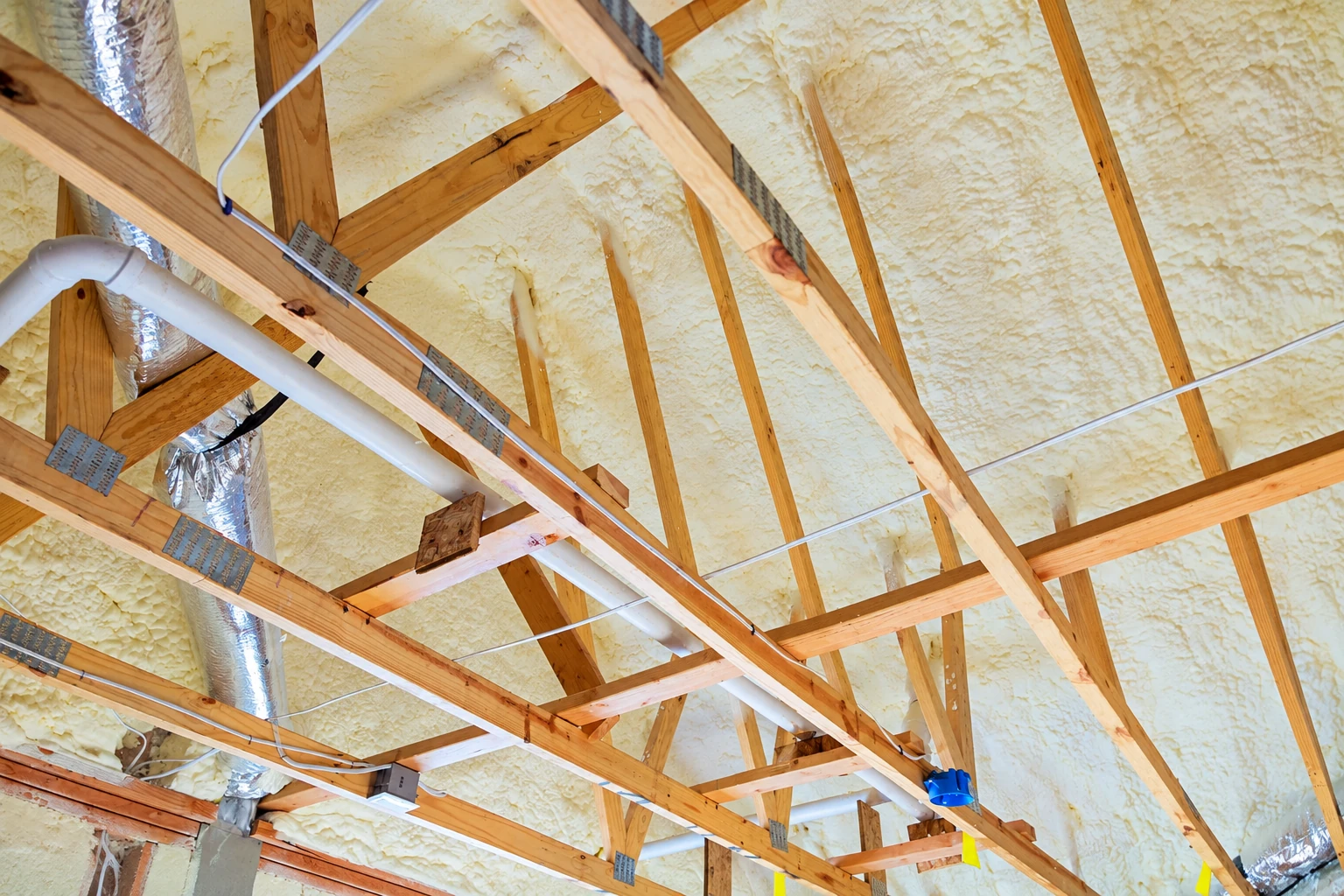
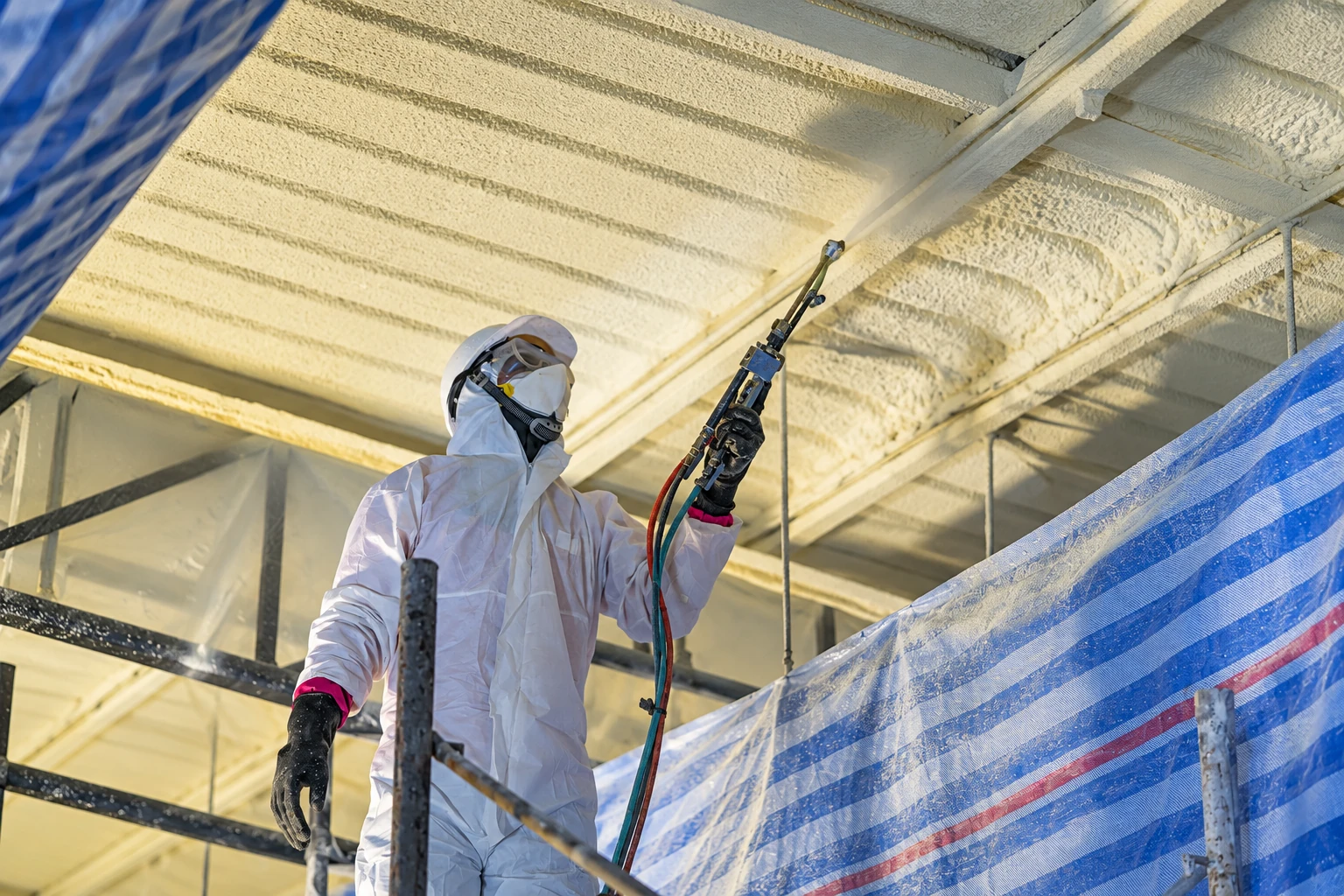
If your ductwork runs through the attic, foam on the underside of the roof brings those ducts inside the insulated space, so they stop cooking all summer. It costs more than loose fill, and we'll tell you when it isn't worth it.
Most calls start with a hot upstairs. We measure what's already up there, seal the gaps, and bring the coverage up evenly all the way to the edges, because thin spots along the eaves let the most heat through.
Blown-in insulation is loose fill blown through a hose, and it's usually the best value for an open attic. We put baffles at the eave vents first, so the new layer can't bury them and stop the attic from breathing.
When the whole house runs drafty or hot, I check the attic, the walls and the crawl space before suggesting anything. Then we start where the money does the most good and leave alone whatever is already fine.
Insulation that got soaked or filled with droppings comes out before anything new goes in, because covering it just buries the problem. We vacuum it out, bag it and clean up after ourselves.
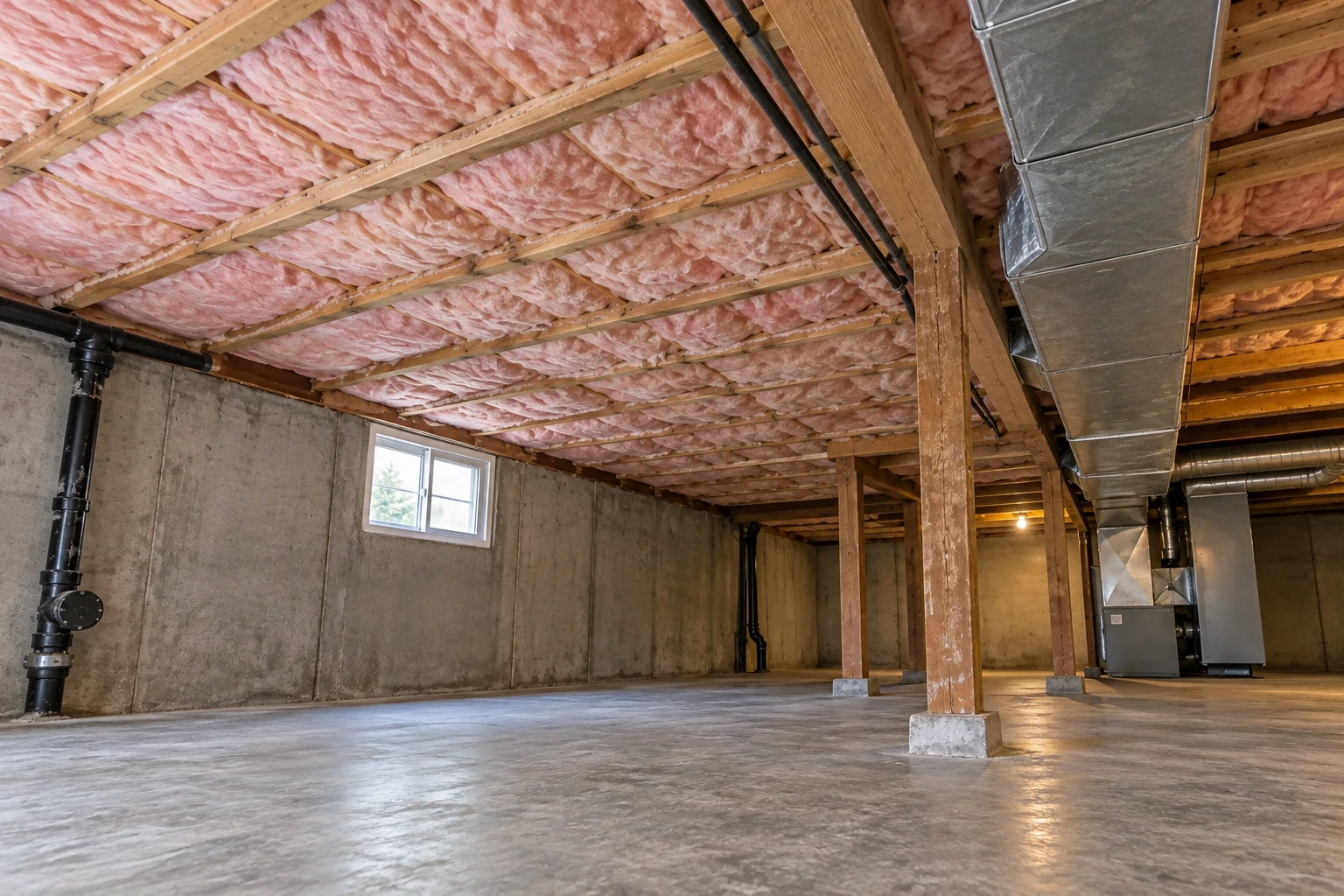
Cold floors in winter usually come from a crawl space with sagging or missing batts. We look for standing water and leaky pipes first, then insulate under the floor and fasten it so it stays up.
Older houses often have walls that are empty or only half full. We can blow insulation in through small holes and patch them, or insulate open walls during a remodel before the drywall goes up.
Air sealing means closing up the gaps before we insulate, around pipes, wires, can lights and the attic hatch. It costs little next to insulation, and it's often what finally fixes a drafty room.
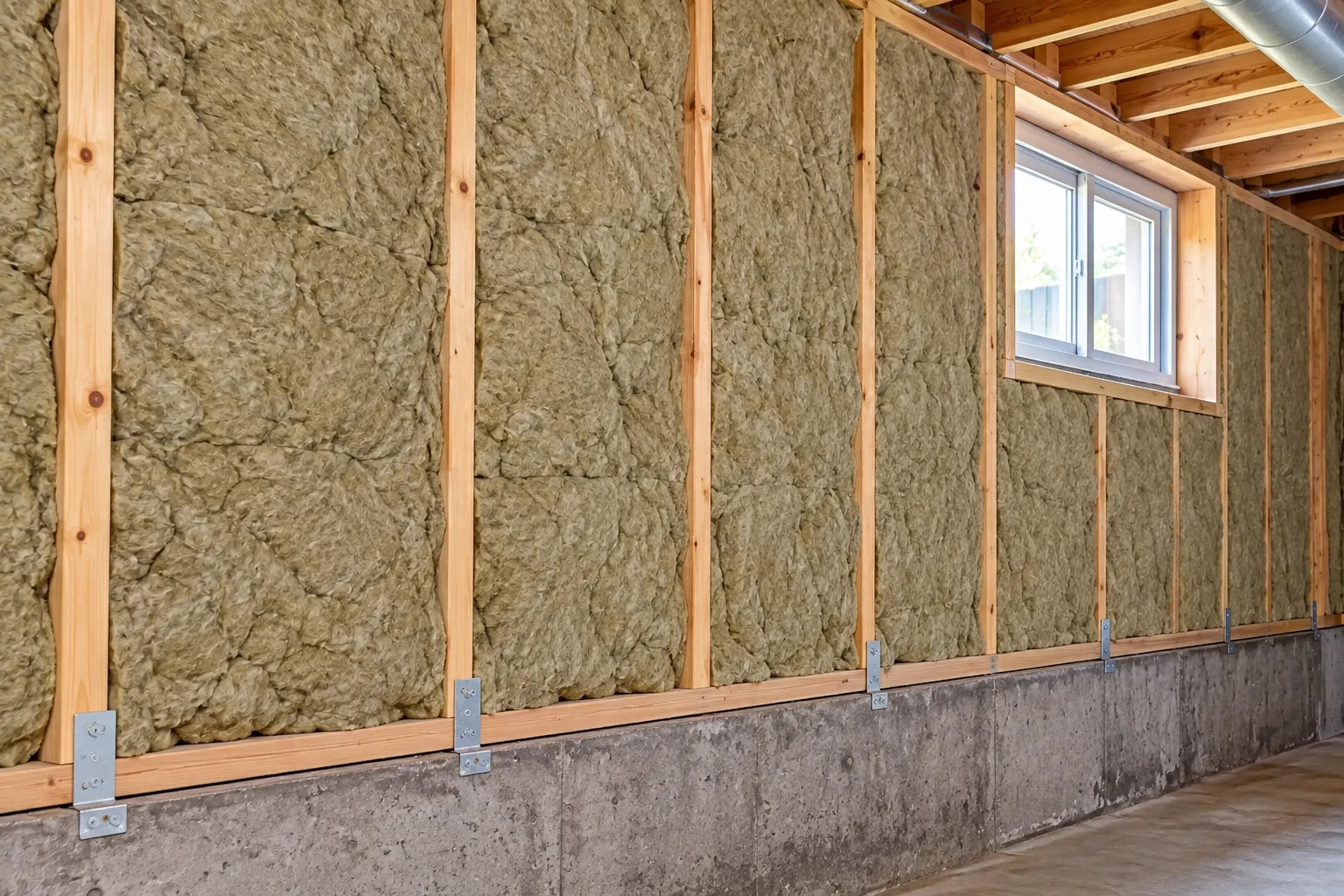
Basements are rare around here. When a house does have one, we insulate the walls and the rim with a material that can handle damp concrete, so moisture doesn't get trapped behind it.
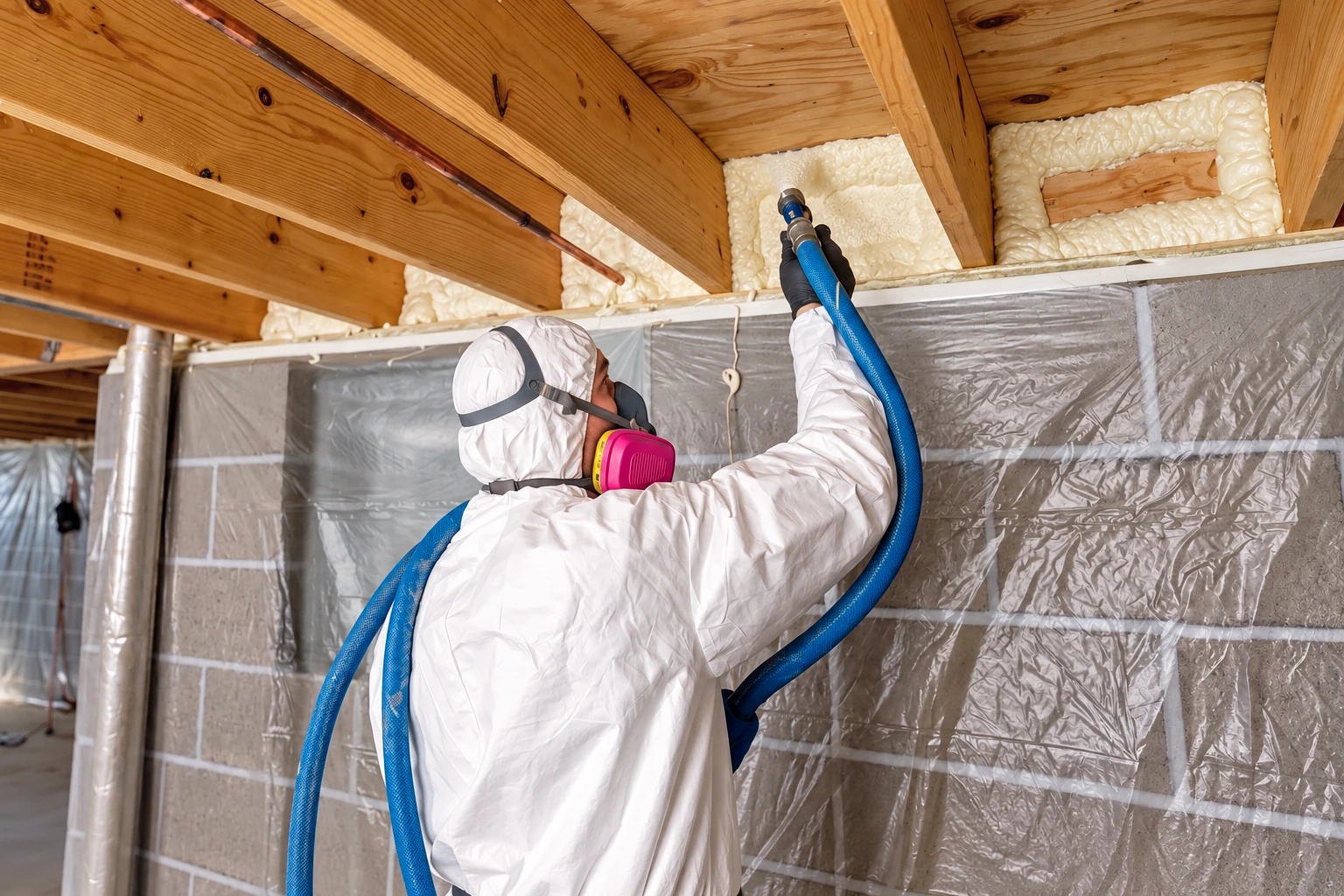
Closed-cell foam is a dense foam that also blocks moisture, so it suits rim joists, crawl space walls and spots that get damp. It's the most expensive option, so we only use it where that moisture protection matters.
Open-cell foam is softer and lighter. It fills odd-shaped cavities and seals air well, so we use it on rooflines and inside walls where moisture isn't a concern and the budget matters.
Shops, offices and rentals get the same careful look before we quote. Where we can, we work around your hours, and we work with the landlord or tenant to keep the space usable while the crew is there.
A crawl space vapor barrier is a heavy plastic sheet laid over the dirt that keeps ground moisture out of your floor framing. We overlap and tape the seams and run the sheet up the walls.
In walls and ceilings, a vapor barrier has to go on the right side for our climate, or it can trap moisture. We check whether the house already has one before we add anything.
Before any new insulation goes in, we seal the top plates, plumbing holes, flues and the hatch, because insulation can't stop air moving through a gap. Then the new layer can actually do its job.
Adding insulation to a finished house means working around what's already there, old wiring included. If we find a bad splice or old cloth-wrapped wire, we deal with it before we bury it.