
An attic that's come up short
Older houses around Modesto often have a few inches that settled years ago, and when that layer is dry and clean we seal the floor and blow new fill right over it.
Upstairs too hot and the power bill climbing? We seal the attic gaps first, then blow insulation in evenly so the rooms hold their temperature.
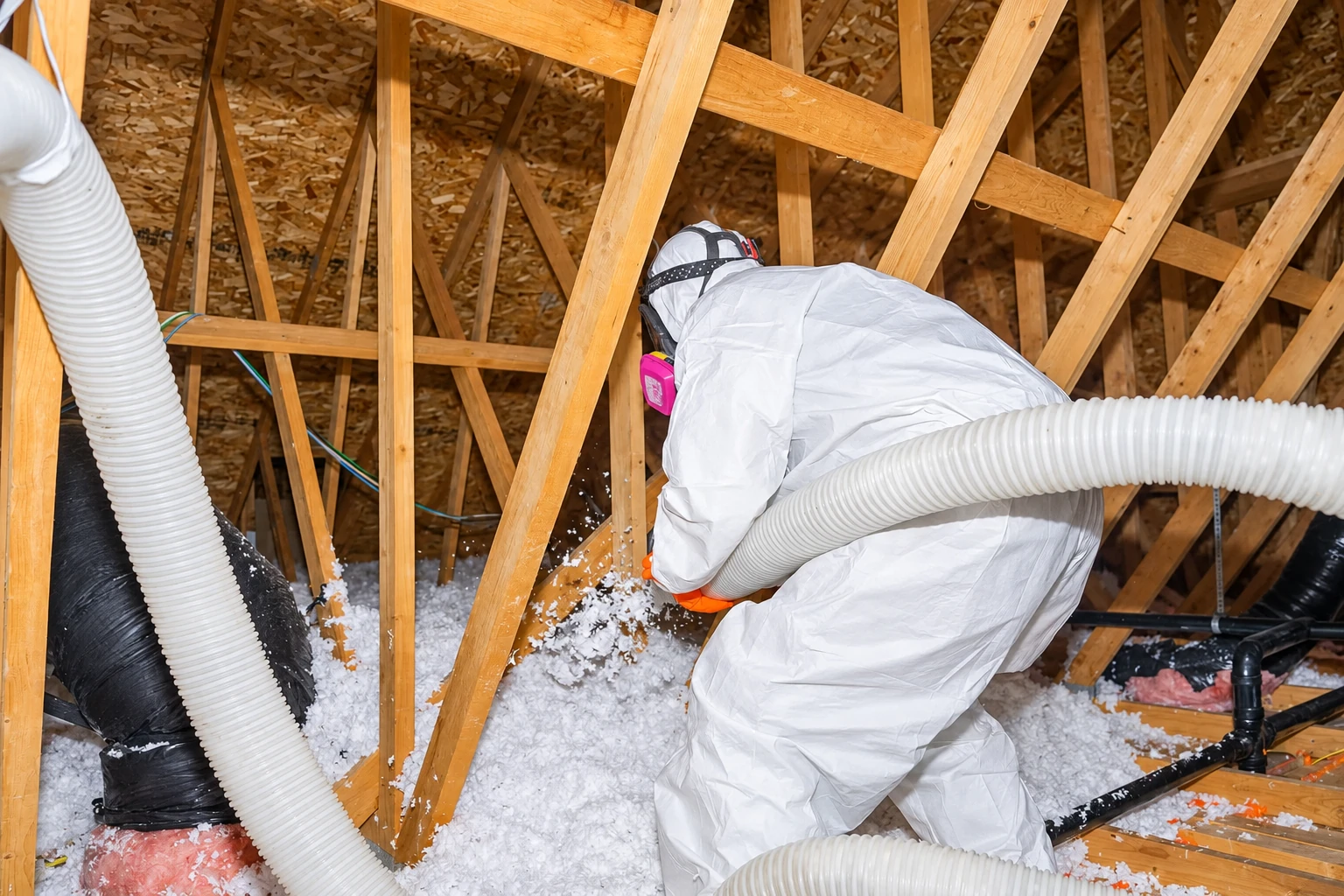
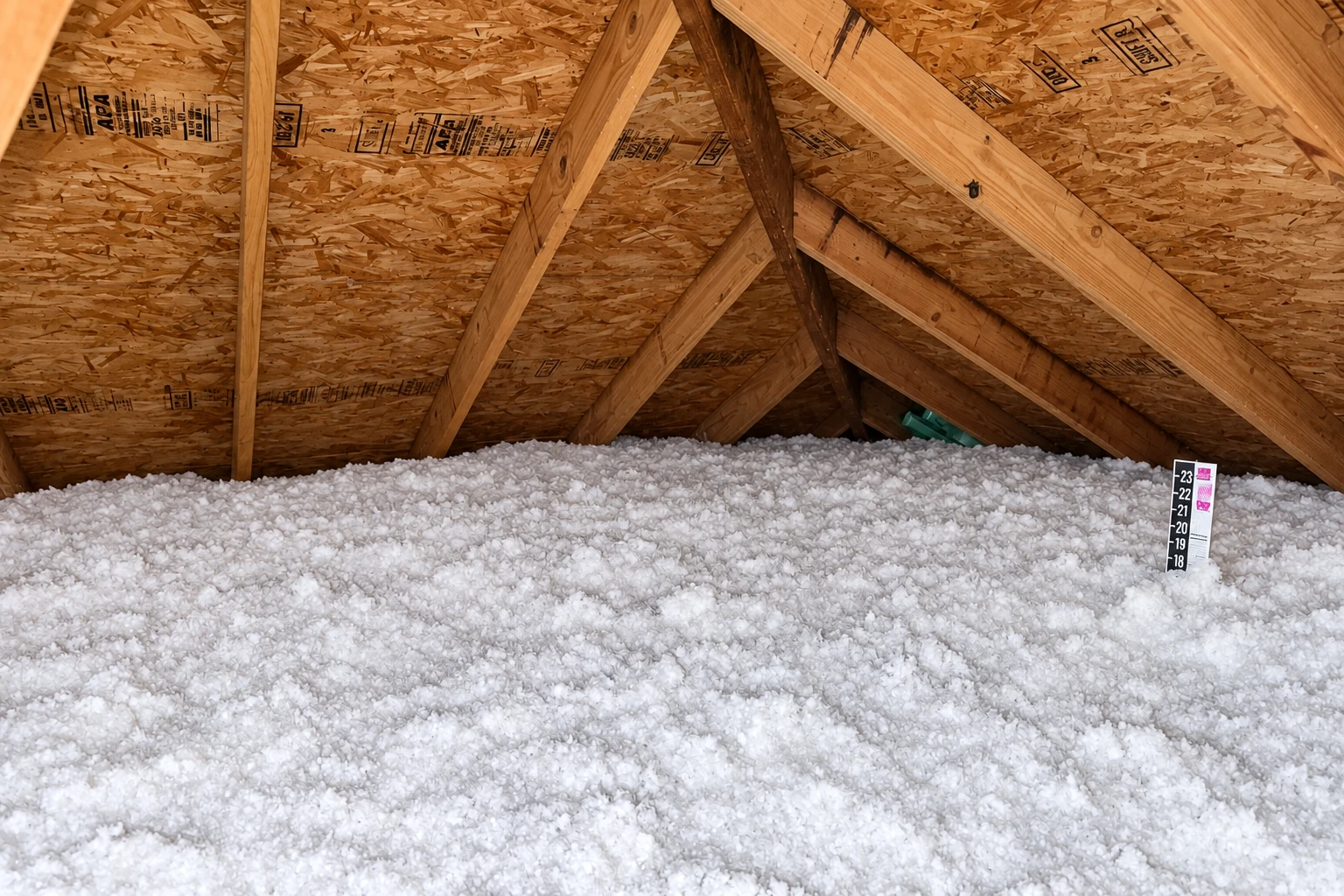
Blown-in insulation is loose fill blown through a hose to cover your whole attic floor, and in Modesto it's usually the simplest way to get a hot upstairs or the room over the garage back to a temperature you can live with.
The price comes down to how big the attic is, how many inches are already up there, how much sealing it needs first, and whether old insulation has to come out before anything new goes in. Those same things set the schedule, along with how easy your hatch is to get through, so your own numbers come from the estimate I write after I've been up there myself.
We're licensed and insured, and we've been doing this work since 2013.
I come out, get into the attic and write the estimate myself, so the price comes from someone who saw your wet spot or buried vent, not a guess over the phone.
If there's already plenty up there, I'll say so and point you to the gap or the duct actually causing the trouble, because insulation you don't need is just money in the attic.
Our installers do the work, and I go over it with you at the end, so you see the depth out at the edges and the open vents for yourself.
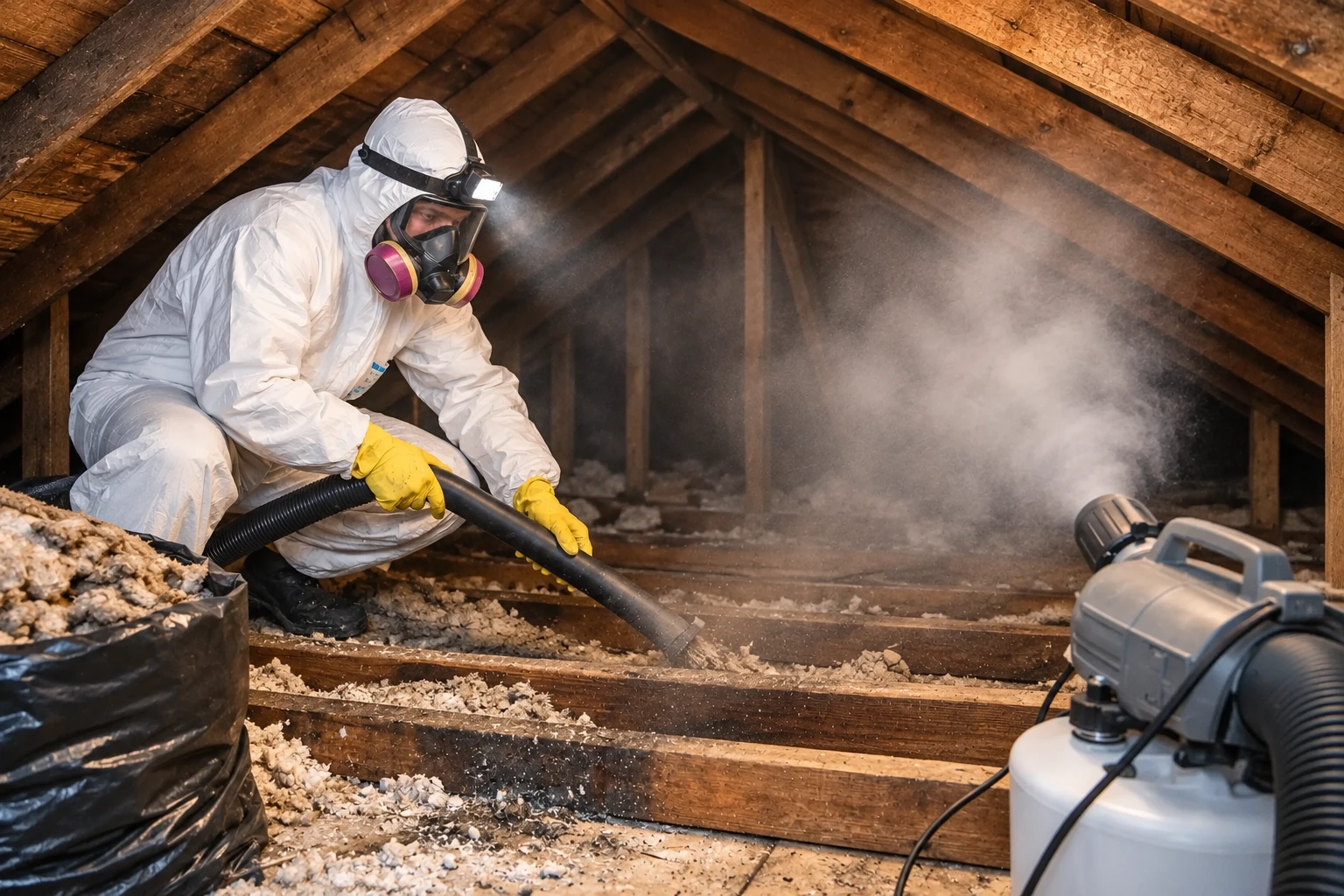
Sealing and fixing come first, which I cover in the questions below, and so does a look at anything in the house that burns fuel, like the furnace or water heater, because a tighter house gives those less air to work with. If the old material is soaked or full of droppings, we don't bury it, since the problem just stays under the new layer, so insulation removal comes before anything else.
Then we set baffles at the eaves, which are channels that hold a path open for air, so the new insulation stays out of the vents and the attic keeps breathing. Skip them and the fill slides into the eaves, the vents choke off and moisture starts showing up in the framing.
We blow the fill all the way out to the edges where the walls meet the roof, because that's where attics usually come up thin, and a deep middle with bare edges is backward. If you want the walls and crawl space looked at in the same visit, that's our home insulation work.
Older houses around Modesto often have a few inches that settled years ago, and when that layer is dry and clean we seal the floor and blow new fill right over it.
Those rooms usually lose the fight to leaks at can lights, pipes and the hatch plus thin coverage at the edges, so sealing and an even layer tend to settle them down.
Plenty of older houses were built with empty exterior walls, and blown-in can fill them without tearing the walls open, as the questions below explain.
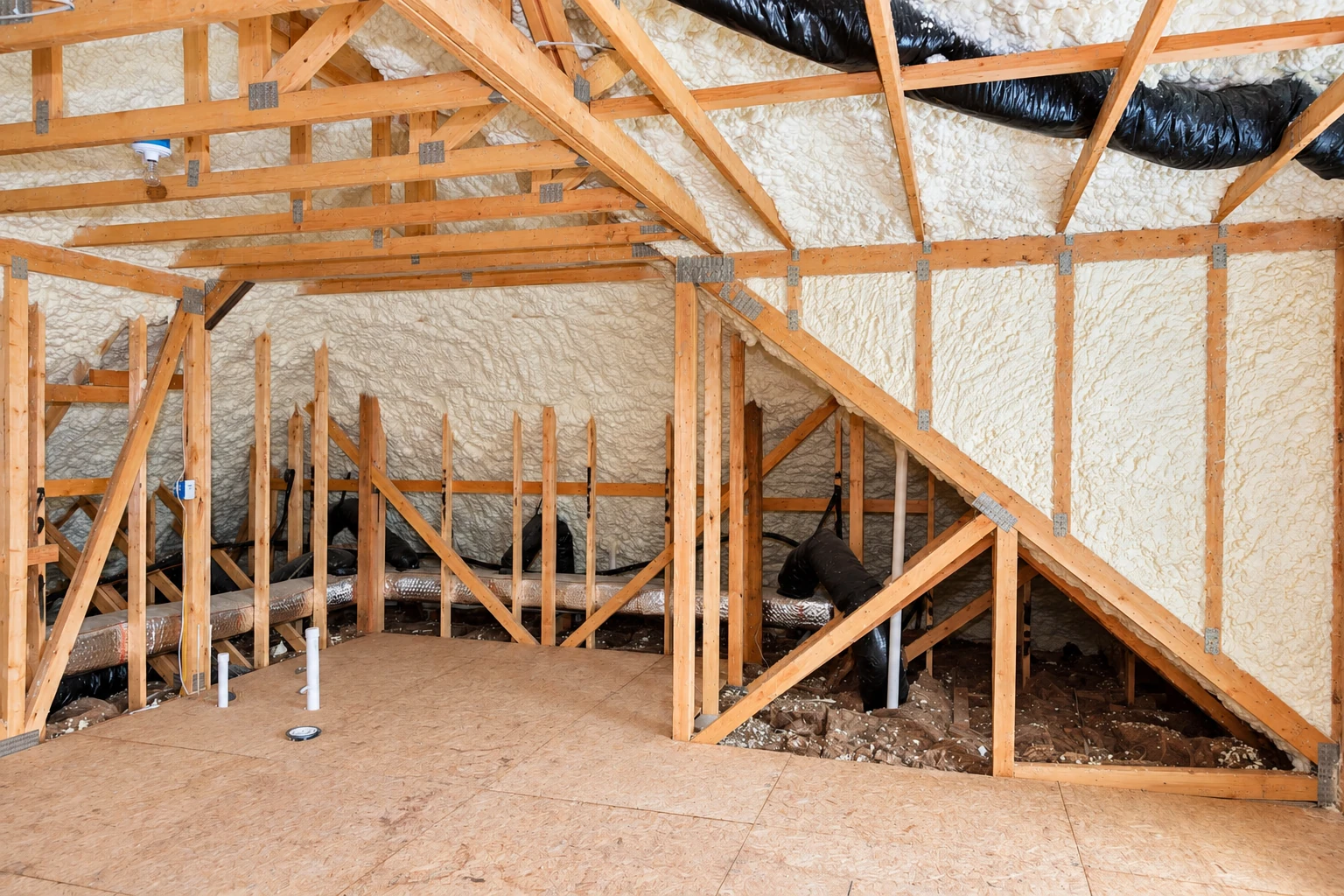
Foam costs more but seals air while it insulates, so with ducts up there it can earn its price. Most other attics do better with sealed gaps and topped-up loose fill.
Send the form and we'll get back to you within one business day to set a time. I come out, look at the attic and write your estimate, free, on site and with no obligation.
Tell us whether it's in a closet, the hallway or the garage ceiling, since getting in and out of the attic shapes how we set up and what the job takes.
Older houses are where we check for old wiring and older kinds of insulation before anything else, so knowing the age tells me what to look at first.
A hot upstairs, a cold room over the garage and a power bill that keeps creeping up point to different spots, so naming the rooms tells me where to start.
Examples of loose-fill depth, baffles at the eaves and sealed hatches, to help you picture what to ask about for your own attic.
Straight answers to what Modesto homeowners ask about adding blown-in insulation, from checking the depth to hiring a licensed crew.
If you can easily see the floor joists, the insulation is level with or below them, and you should add more. ENERGY STAR puts most attics at about 10 to 14 inches, depending on the material, and if yours sits well above the joists you probably have enough. I'll measure it and tell you either way.
Sealing comes first, with every opening in the attic floor closed using sealant, spray foam or rigid blocking. Wet insulation, moldy or rotted framing, poor ventilation and vents blowing moist air into the attic get fixed first. Knob and tube wiring from before 1930 can be a fire hazard under insulation, and pea-size, flaky gray vermiculite stays untouched until a lab tests it for asbestos.
Yes, existing exterior walls can be filled through small holes near the top of each wall cavity, drilled from inside or outside, so the walls stay in place. Which side makes sense depends on your siding and interior finish, and I'll show you the options at the estimate.
Look up the contractor's license number on the Contractors State License Board website, or call the board at (800) 321-2752. Someone without a license can only take jobs up to $1,000, and only when the work needs no permit and they have no employees, so ask for that number before you sign anything.
Ask the city first, since its Building Safety Division issues Modesto's permits once plans are approved and fees are paid. You can ask about the process on the city's building permits page or by calling 209-577-5232. When a job needs a permit, we pull it with whichever office has your address, city or county, and set up the inspection before the work gets covered.
We're based in Modesto and work across Stanislaus, San Joaquin and Merced counties, so call (209) 222-5441 if you're unsure we reach you.